Research
Ways a Robot Can Fail a Simple Task
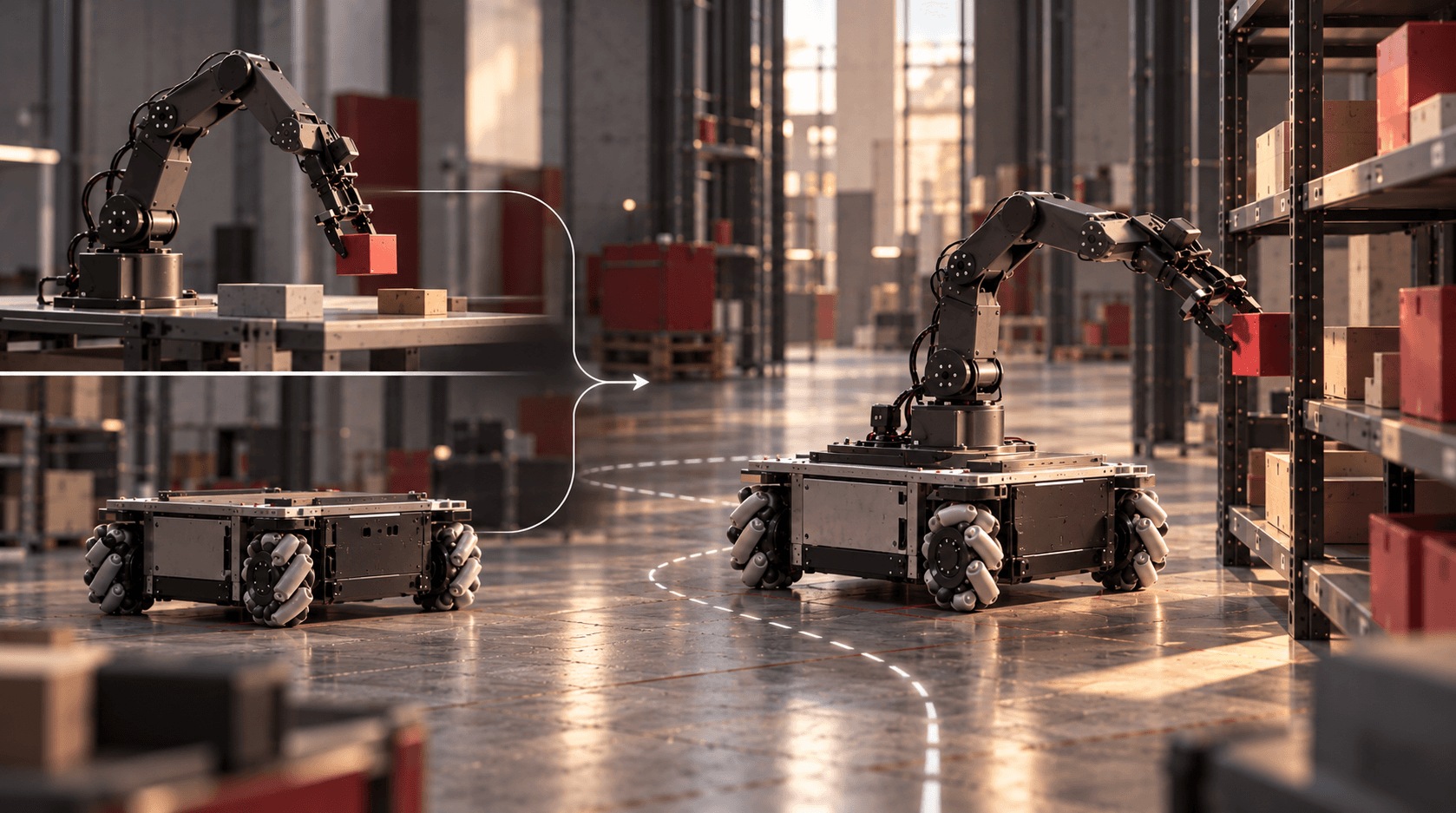
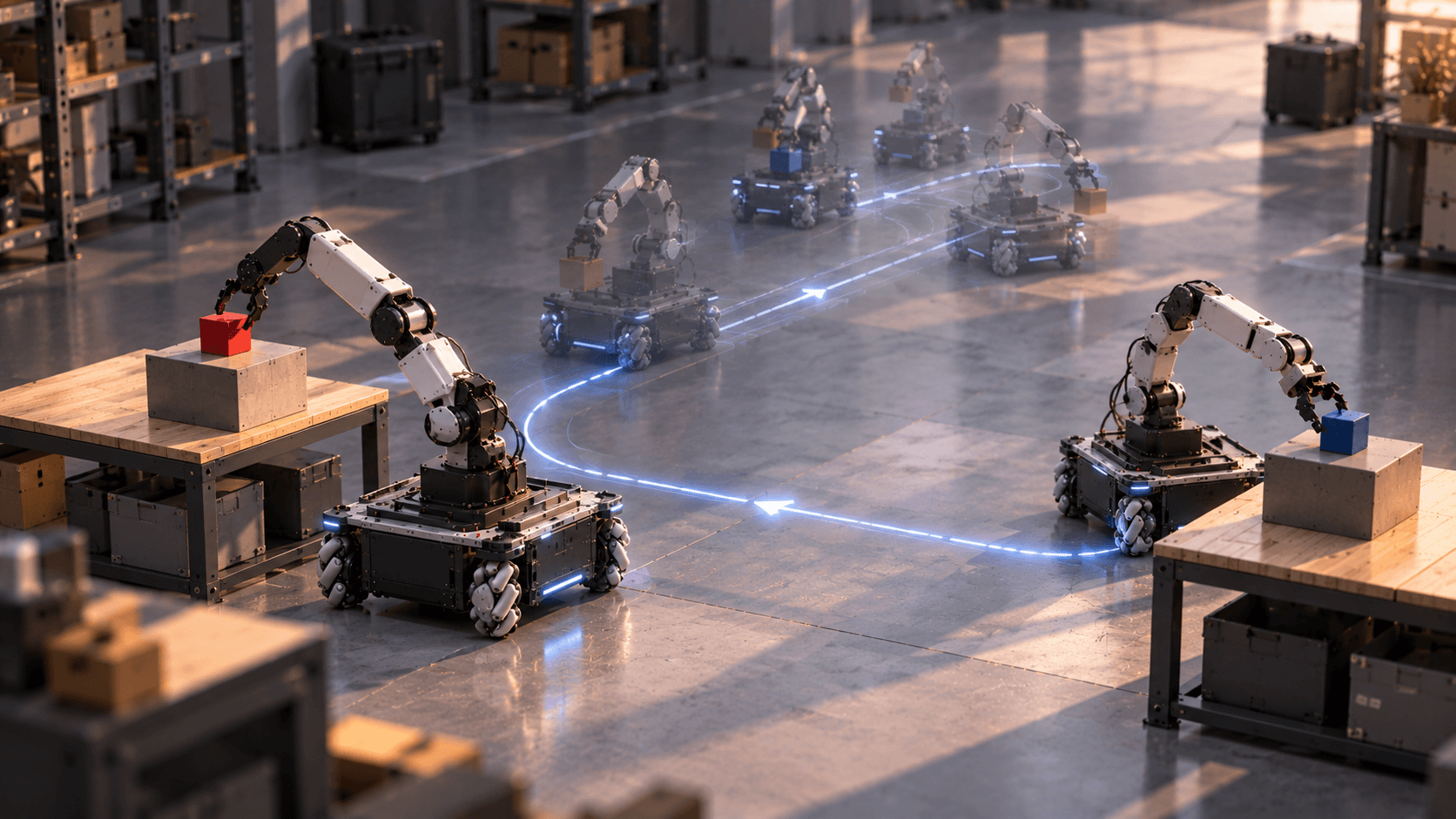
Pick up the red cube and place it on the table. Sounds simple. For a robot, that single instruction can fail at almost every step.

A pick-and-place task looks straightforward because humans handle it without thinking about the individual steps.
A robot has to see the object, plan a path, reach the right position, grasp it, hold it, and place it accurately. A failure at any point can stop the entire task.
1. It doesn't see the object properly
Before the robot can move, it needs to understand its surroundings. Poor lighting, clutter, occlusion, or a change in the object's position can make perception difficult. If the robot estimates the cube's location incorrectly, every step that follows starts from the wrong information. Perception is the first link in the chain.
2. It plans the wrong move
Seeing the cube is only part of the problem. The robot still needs to find a collision-free path to reach it. Obstacles, the robot's own joints, and the position of the object all affect the motion. A planner that chooses the wrong path can cause a collision before the gripper ever reaches the cube. This is why robot navigation and motion planning are such important parts of autonomous robotics.
3. It misses the grasp
The robot reaches the cube. Now it has to grab it.
A small error in the gripper's position or orientation can be enough to miss the object. Even a few millimetres can matter when the grasp needs to be precise. This is one reason robot hands are so difficult to build and control. Manipulation depends on accurate positioning and reliable contact with the object.
4. It drops the object
A successful grasp doesn't guarantee a successful task. The cube can slip from the gripper, rotate unexpectedly, or fail to stay secured while the robot moves. The robot therefore needs to maintain control of the object throughout the motion, not just establish contact with it.
5. It fails at the end
The robot finally reaches the table. It can still fail. It might release the cube too early, place it outside the intended position, or collide with another object while putting it down. The final placement is part of the task, not an afterthought.
One task, five failure points
A human sees:
pick up cube → place cube
A robot sees a sequence of problems:
perceive → plan → grasp → hold → place
Every stage has its own failure modes.
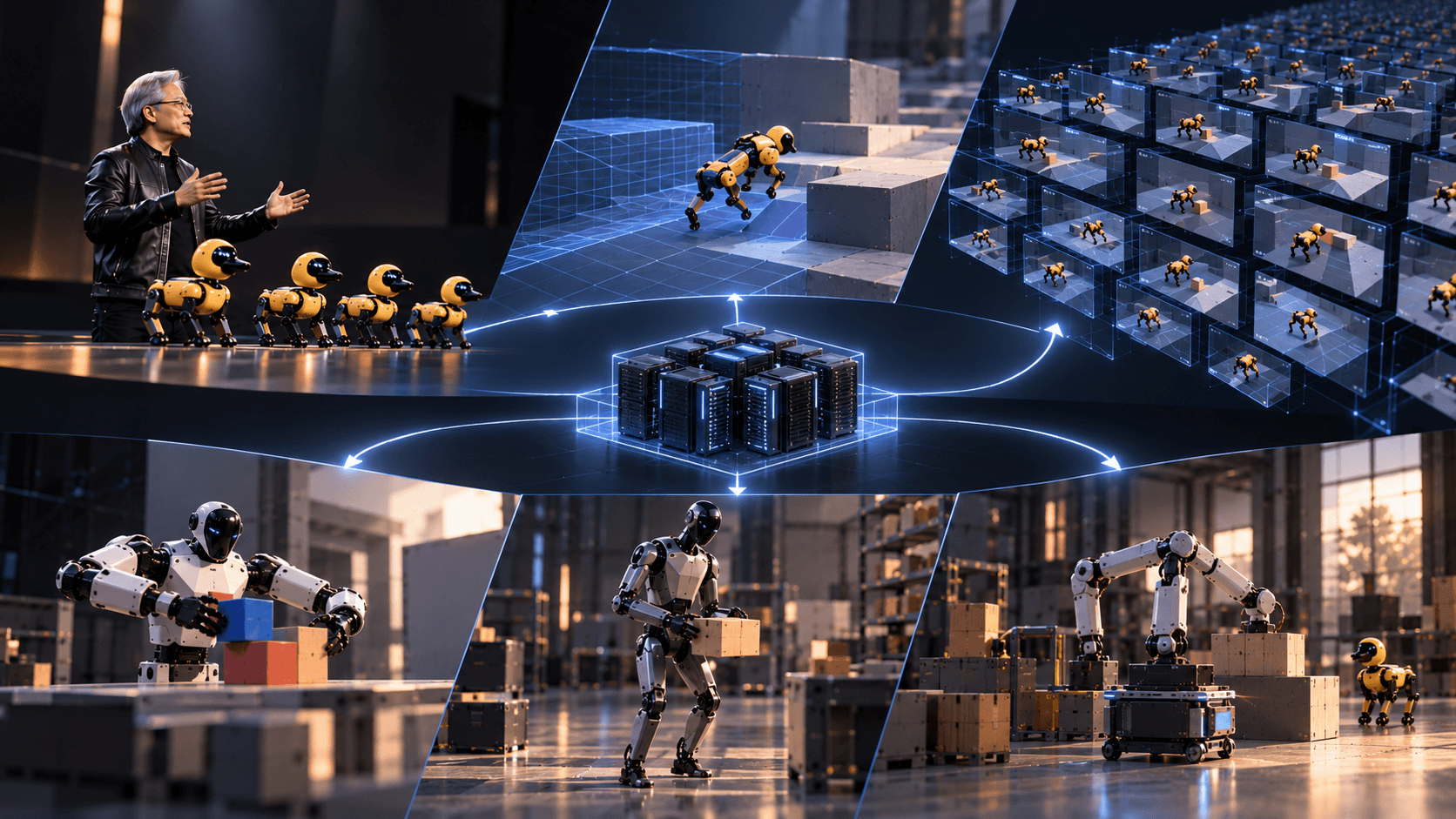
That's why even simple tasks are useful benchmarks for robotics. A pick-and-place simulation in MuJoCo can isolate these behaviors and make it easier to test how a robot handles each stage. And simulation provides a controlled environment for doing that testing before moving to physical hardware, as we covered in Why Robots Train in Simulation Before the Real World?.
The task may look simple. The robot has to get every step right.
FAQ
Why is pick-and-place difficult for robots?
Because the task combines perception, motion planning, grasping, object control, and precise placement. A failure at any stage can cause the entire task to fail.
What can cause a robot to miss an object?
Errors in perception, position estimation, gripper alignment, or motion planning can cause the robot to approach the object incorrectly.
Can a robot drop an object after successfully grasping it?
Yes. The object can slip or shift during movement if the grasp is not stable.
Why are simple tasks useful in robotics?
Simple tasks isolate individual capabilities such as perception, planning, and manipulation, making them useful for testing and improving robotic systems.