Research
AMD Just Bet $8.2 Billion on Physical AI
AMD is acquiring World Labs for $8.2B, betting that spatial intelligence, world models and physical AI will shape the next generation of computing.
AMD just spent $8.2 billion on something that has almost nothing to do with making better chips.
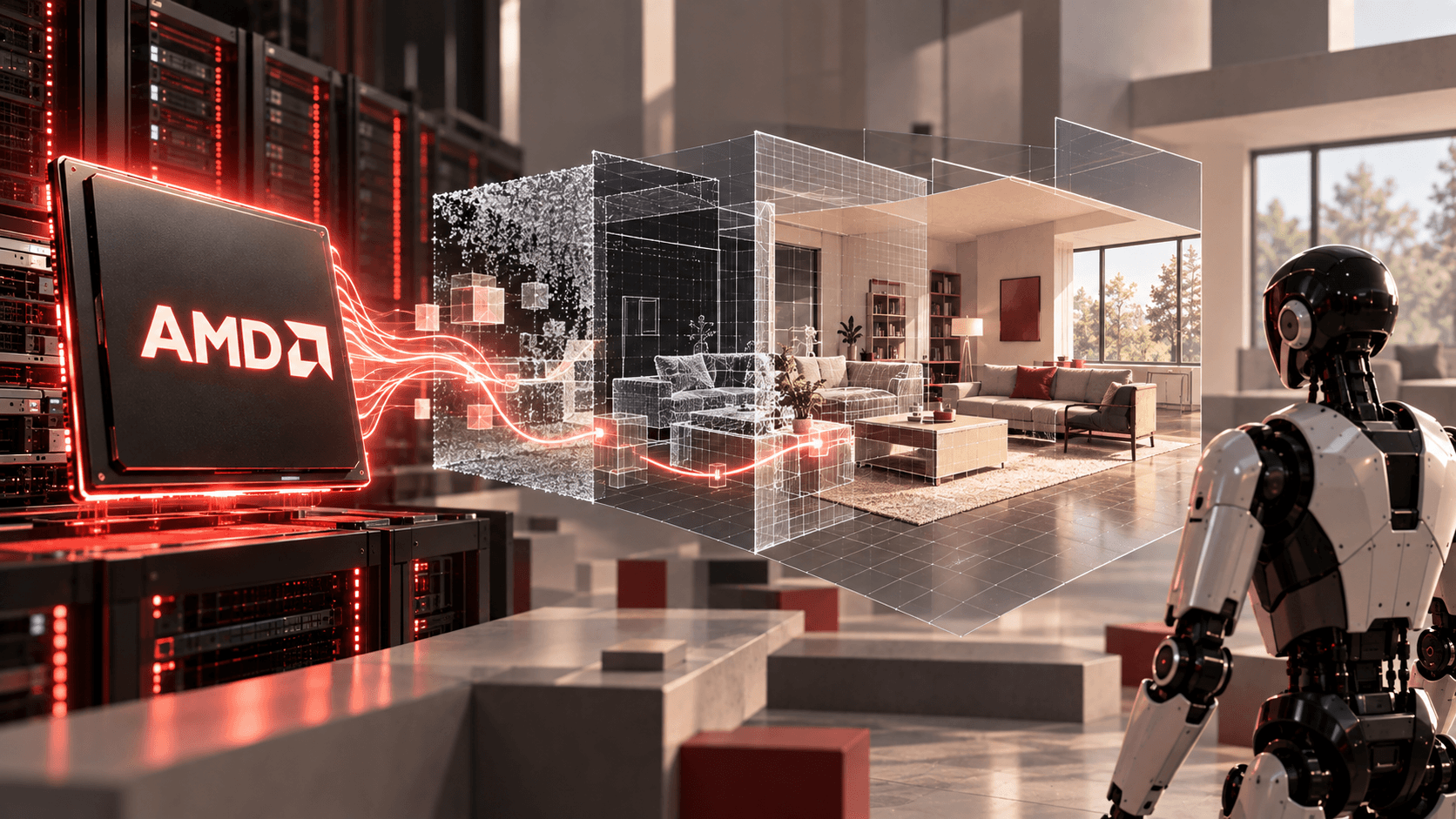
The company has agreed to acquire World Labs, the AI research company founded by Fei-Fei Li and focused on spatial intelligence and world models. The all-stock deal is valued at approximately $8.2 billion and is expected to close by the end of 2026, subject to regulatory approval.
At first, buying an AI model company might seem like an unusual move for a chipmaker. But AMD isn't just interested in another AI application. World Labs is working on models that can understand, reconstruct, generate, and simulate 3D environments, bringing AI closer to the physical world.
And that's where robotics, simulation, and physical AI enter the picture.
Why World Labs?
Most of today's AI operates in a world of text, images, and video. Physical AI has a different problem: it needs to understand space.
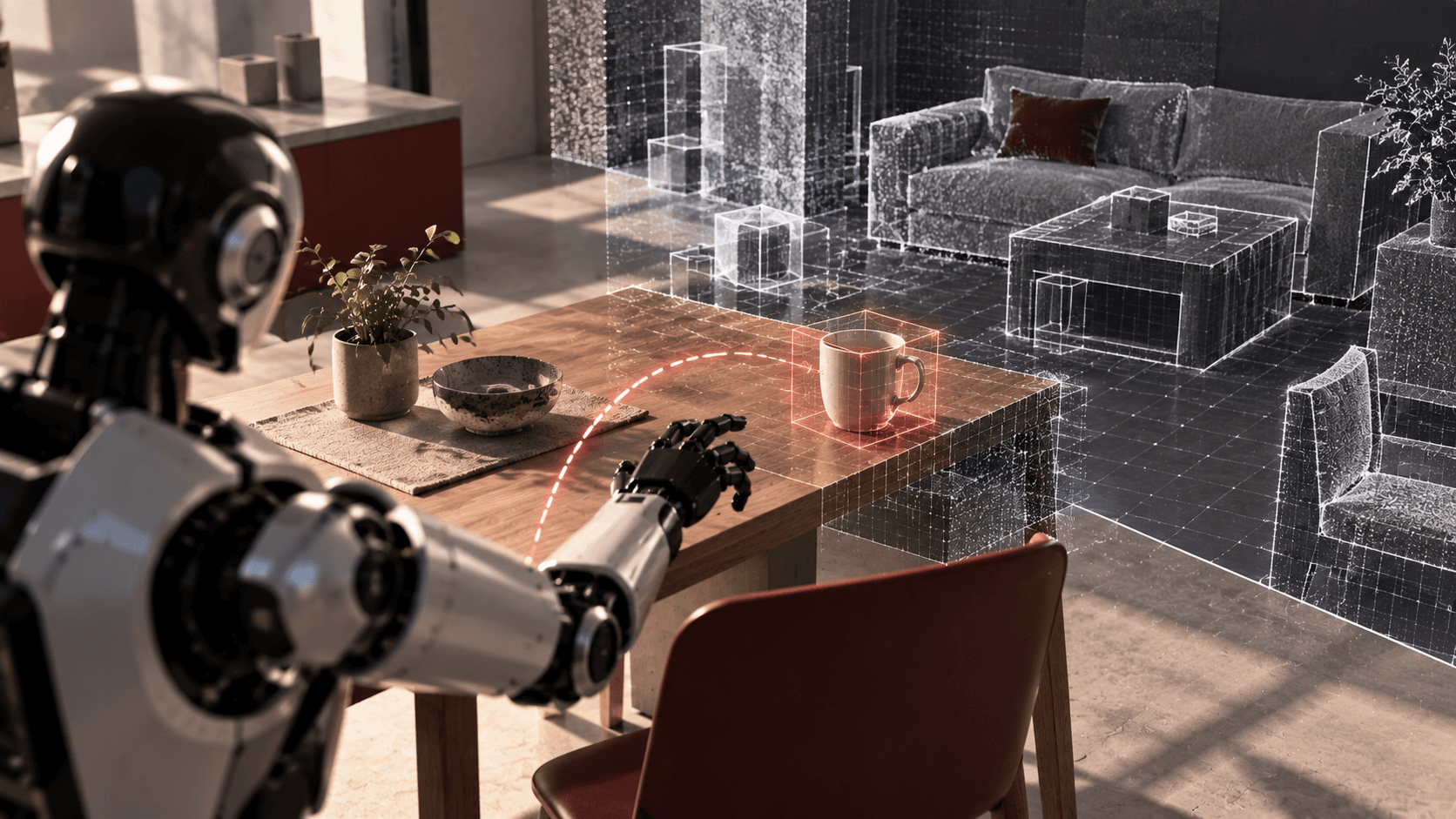
A robot can't simply recognize that something is a cup. It needs to understand where that cup is, what is around it, how far away it is, how objects relate to one another, and what might happen if it moves or interacts with them.
World Labs calls this spatial intelligence. Its models are designed to perceive, generate, reason about, and interact with virtual and physical worlds across space and time.
That work has already moved beyond basic 3D reconstruction. World Labs' Atlas is an omni-world model designed for spatial intelligence, while the company's robotics work explores using generated and reconstructed worlds for training and evaluating robot policies.
That connection is important.
A sufficiently capable world model could give an AI system a richer representation of an environment before it acts. It could also create simulated versions of real spaces where robotic systems can practice, test behaviors, and learn without requiring every experiment to happen on physical hardware.
World Labs has explicitly been working on this real-to-sim-to-real loop for robotics.
AMD Is Buying More Than a Model
The $8.2 billion deal makes more sense when you look at what AMD says it actually wants from the acquisition.
AMD says World Labs' model expertise will help it understand how emerging AI workloads are evolving and shape its future hardware, software, and systems around those workloads. The company specifically points to reasoning, robotics, simulation, and physical AI as areas where compute demands are becoming more diverse.
In other words, AMD doesn't just want to sell compute to the companies building these models.
It wants a much closer understanding of what the models will need from the compute underneath them.
That distinction matters.
AI hardware has historically been shaped by the workloads running on it. As models become more sophisticated, the optimal infrastructure can change with them. A system processing text is different from one generating and manipulating persistent 3D worlds. A model controlling a robot has different requirements again because perception, simulation, planning, and real-time action all become part of the workload.
World Labs gives AMD a team working directly on those emerging models.
The two companies were already collaborating on training and inference optimization using AMD GPUs before the acquisition. World Labs says that partnership helped convince both sides that bringing their hardware, software, and model expertise together made sense.
That makes the acquisition look less like a sudden bet and more like the next step in an existing relationship.
From 3D Worlds to Physical AI
The bigger opportunity is what happens when spatial intelligence becomes part of the physical-AI stack.
A robot operating in a warehouse, factory, or home needs more than object recognition. It needs a representation of its surroundings that can support navigation, manipulation, planning, and prediction.
This is why world models are becoming increasingly interesting for robotics.
Instead of training a robot entirely through physical trial and error, a world model could potentially provide a virtual environment that reflects the structure and dynamics of the real one. The robot can then practice inside that environment before taking what it learned into reality.
World Labs has already described this direction through its real-to-sim-to-real work, where real environments can be reconstructed into simulation environments for training and evaluating robot policies.
We've covered the broader importance of this idea in why robots need to understand space, not just objects. Spatial intelligence isn't just about making prettier 3D environments. For robotics, it's about giving machines a better understanding of the world they need to act inside.
And that could create a new class of AI workloads.
Instead of an AI model simply answering a question, imagine one continuously modeling a physical environment, predicting what could happen next, generating possible scenarios, and helping a robot decide what to do.
That requires serious compute.
The Bigger Bet
This is why the acquisition is bigger than World Labs.
AMD is betting that AI won't remain primarily a digital phenomenon. As AI moves into robotics, simulation, autonomous systems, and other physical applications, the computing stack underneath it will have to evolve as well.
World Labs brings AMD expertise in one of the areas likely to matter: models that understand the physical world. AMD brings the hardware, software, and systems infrastructure needed to run increasingly demanding AI workloads.
The acquisition also brings Fei-Fei Li directly into AMD. Following the deal's close, Li is expected to become AMD's executive vice president and chief scientist, reporting to CEO Lisa Su.
The bigger question is what this means for the AI industry.
For years, the competition was largely about building bigger language models and the infrastructure needed to train and serve them. Now another frontier is emerging: models that understand and operate in the physical world.
Robots will need them. Autonomous systems will need them. Simulators may need them. And the companies building the compute infrastructure will need to understand what those workloads look like.
AMD isn't just betting on World Labs.
It's betting that the next major AI workloads will happen in the physical world.
And AMD wants to be powering them.
FAQ
What is AMD acquiring?
AMD has entered into a definitive agreement to acquire World Labs, the AI research company focused on spatial intelligence and world models, in an all-stock transaction valued at approximately $8.2 billion.
What does World Labs build?
World Labs develops spatial-intelligence models that can generate, reconstruct, and simulate interactive 3D environments from text, images, and video. The company also works on robotic learning and simulation.
What is Atlas?
Atlas is World Labs' omni-world model for spatial intelligence. It is part of the company's broader effort to build models that can represent and reason about physical and virtual environments.
Why would AMD want a world-model company?
AMD says the acquisition will give it deeper insight into emerging AI workloads and help shape future hardware, software, and systems for areas including robotics, simulation, reasoning, and physical AI.
Has the acquisition closed?
Not yet. The transaction is expected to close by the end of 2026, subject to regulatory approvals and customary closing conditions.
Related Reading
- Why Robots Need to Understand Space, Not Just Objects: the spatial-intelligence problem at the center of World Labs' work.
- The Race to Build a Robot Foundation Model: how companies are approaching general-purpose robot intelligence from different directions.
- Why Robots Train in Simulation Before the Real World? : why simulated environments are becoming an important part of physical-AI training.
- New Ways We're Training Robots Without Building More Robots: how simulation, video, synthetic data, and demonstrations can scale robot experience.