Research
China's Robot Brain Race: Light-O1 and Embodied AI
China is building embodied AI models and massive data infrastructure to give robots the intelligence needed to learn and generalize.
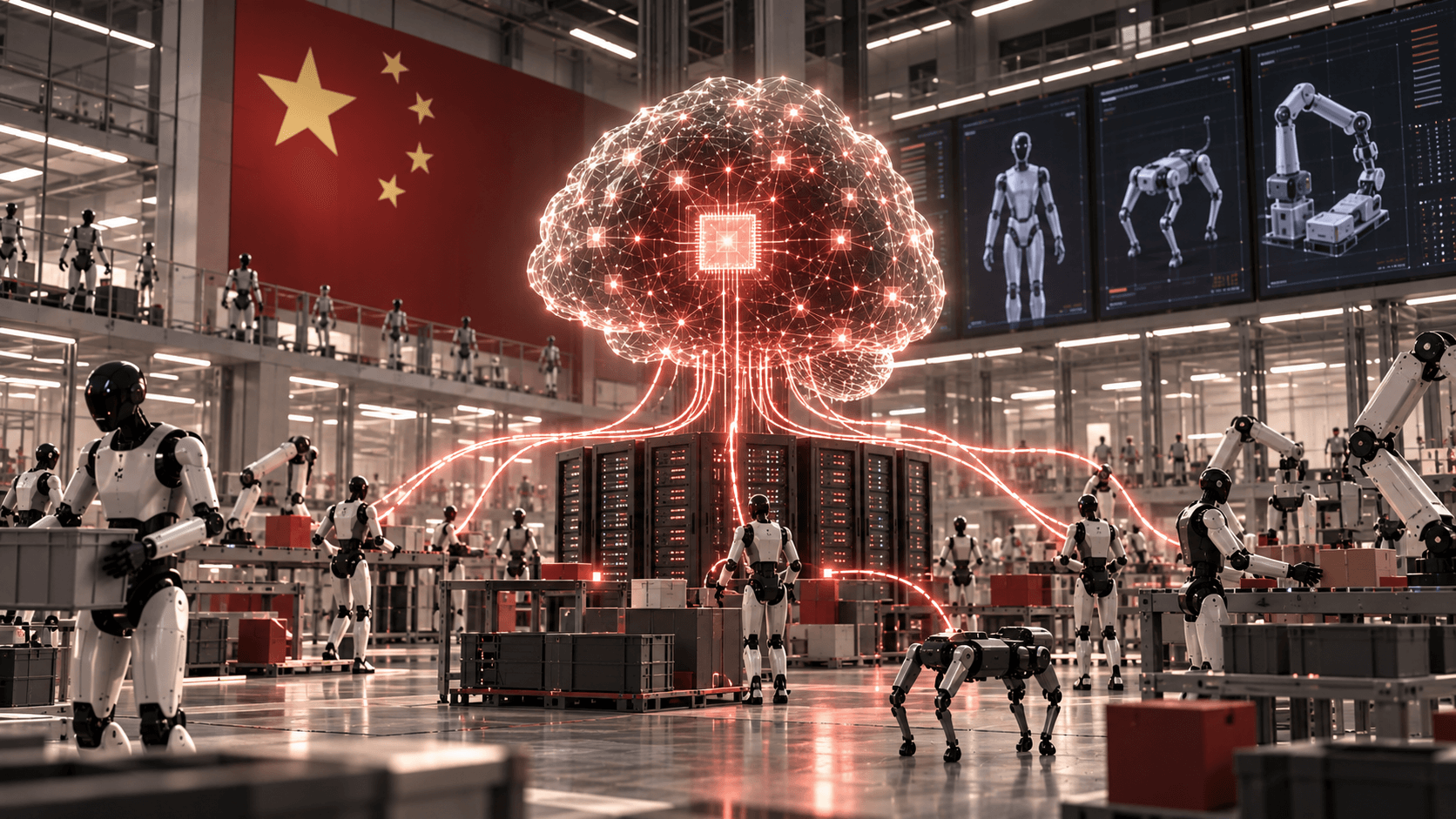
China isn't just building more robots. It's starting to build the brains behind them.
The next challenge in robotics isn't simply making a machine walk, grasp an object, or follow a predefined sequence. Robots need to understand the physical world, perform different tasks, and transfer what they've learned to new environments and even different robot bodies.
That is the problem behind the growing race to build embodied AI foundation models.
One of the latest examples is Light-O1, a general-purpose embodied foundation model released by Chinese AI company Light Origins in September 2026. The company says the model learns a transferable human action prior from internet-scale human video and then adapts that knowledge to different robot embodiments.
But Light-O1 is only one part of the story. Around it, China is also building the infrastructure needed to collect, process, and train on huge amounts of physical-world data.
The Shift From Robot Skills to Robot Intelligence
A traditional robot system is often designed around a particular task. If you want a robot to pick objects from a conveyor, you can collect demonstrations for that environment and train a system to perform the job.
The problem appears when the environment changes.
A different object may require a different grasp. A different room may require a different movement strategy. A different robot body changes how the same instruction needs to be executed.
Foundation models are attempting to solve this at a broader level. Instead of learning one isolated skill, they are trained on much larger and more diverse datasets so that the model can develop reusable knowledge about perception, actions, and the physical world.
Light-O1 takes an interesting approach to this problem. Light Origins extracts structured human actions from video and represents them in a unified action space. The company then pretrains an autoregressive Transformer on sequences combining language, visual observations, and action information before adapting the model to specific robot embodiments and tasks using robot data.
The underlying idea is that humans already provide an enormous source of physical-world experience.
People walk, reach, pick things up, manipulate objects, navigate rooms, use tools, and react to changes around them. Instead of collecting every one of those experiences again with a robot, Light Origins is trying to extract useful action knowledge from videos of humans.
That gives the model a much broader starting point.
Light-O1 Is Built Around Transfer
The interesting part of Light-O1 isn't simply that it can control a humanoid.
Light Origins says the same model can drive humanoids with different bodies and hands, while performing tasks that combine locomotion, posture, and manipulation. The company calls this cross-embodiment transfer.
That distinction matters because robot intelligence has traditionally been tightly coupled to hardware.
A policy trained for one arm doesn't automatically work on another arm with different kinematics. A navigation system designed for a wheeled robot isn't directly transferable to a quadruped. A humanoid has its own balance and whole-body coordination problems.
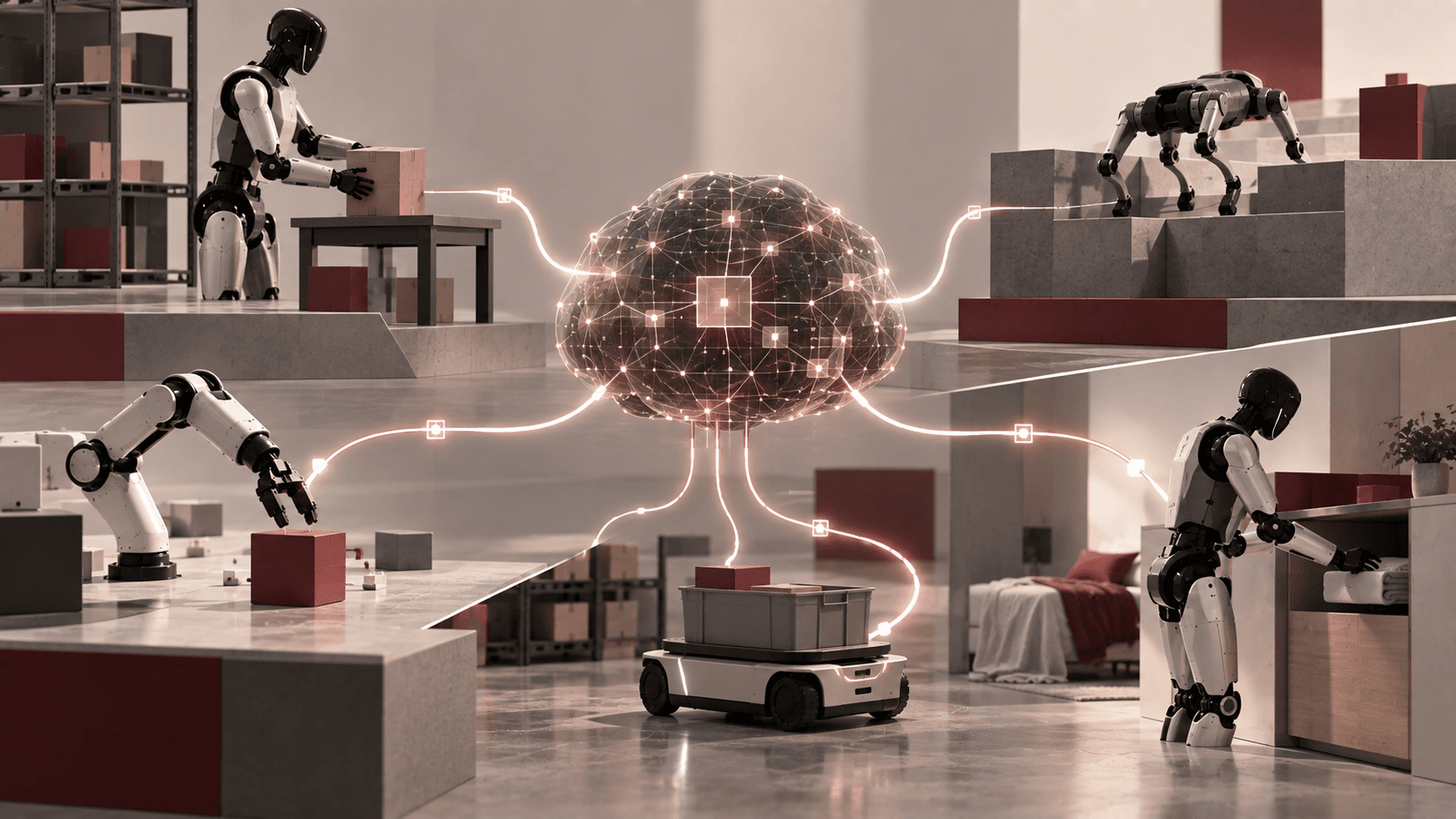
A general foundation model needs to separate some of the knowledge about what should happen from the exact mechanics of how one particular robot does it.
Light Origins reports that increasing the amount of human-action pretraining produced power-law reductions in next-action prediction loss and whole-body pose error after adaptation across different embodiments. In other words, the company is arguing that scaling the human-action pretraining itself can improve how transferable the resulting representation becomes.
The company is also building the infrastructure to push that scaling further. Light Origins says its data infrastructure operates at the thousand-GPU scale, with weekly video-processing throughput reaching 200,000 hours.
That makes the story less about one model release and more about a strategy: scale the data, scale the pretraining, then transfer the resulting intelligence into robots.
China Is Building the Data Infrastructure Too
A foundation model is only as useful as the experience behind it.
Robot data is expensive to collect. Physical robots have to perform tasks, sensors have to capture what happened, and the process has to be repeated across enough environments and objects to teach a model how much variation exists in the real world.
China is investing in infrastructure specifically designed around this bottleneck.
In Beijing, the Embodied Artificial Intelligence Robot Data and Training Base operated by the Beijing Innovation Center of Humanoid Robotics has nearly 6,000 square meters of training space containing more than 40 simulated real-life environments. Data collectors perform tasks across household, industrial, and commercial scenarios using specialized equipment. The center says its long-term goal is to generate one million hours of high-quality interactive data for humanoid robots.
That is important because the competition in embodied AI isn't only happening at the model layer.
There is a parallel competition to build the data pipeline behind those models: collecting demonstrations, creating datasets, training systems, evaluating them, and feeding real-world experience back into the next generation.
Light Origins is pursuing another version of this at scale. Its broader research portfolio includes LightNav-0, a general-purpose navigation model trained using a Real2Sim2Real pipeline that turns more than 2,000 real-world scenes into over 4,000 hours of simulation-based navigation experience.
This combination of real-world data, human video, and simulation is becoming increasingly important. We've previously looked at new ways we're training robots without building more robots, and the same principle is becoming central to foundation-model development: robots need more experience than physical hardware alone can easily provide.
The Race Is Moving Toward the Robot Brain
None of this means China has already solved general-purpose robotics.
Light-O1 still requires adaptation to robot embodiments and tasks, and the models remain dependent on large-scale training infrastructure and carefully constructed data. Generalizing reliably across arbitrary environments, objects, hardware, and long-horizon tasks remains an open problem.
But the direction is significant.
The competition is increasingly moving beyond who can build a robot that performs a particular task. The bigger question is who can build an intelligence layer that can transfer knowledge across tasks, environments, and machines.
That changes what matters in robotics.
Better hardware will continue to matter. But so will the amount and diversity of data available to train the models controlling that hardware, the infrastructure used to process it, and the methods used to transfer knowledge from humans and simulation into physical machines.
We've seen a similar shift in the race to build a robot foundation model, where companies such as Skild AI, Dyna Robotics, Generalist AI, NVIDIA, and Google DeepMind are taking different approaches to the same broader problem.
China is now building its own ecosystem around that problem, with models such as Light-O1 and large-scale facilities designed to generate physical interaction data.
The robotics race may therefore be shifting from who builds the most robots to who can give those robots the most useful intelligence.
And that could make the robot brain just as important as the robot itself.
FAQ
What is Light-O1?
Light-O1 is Light Origins' general-purpose embodied foundation model. It uses human-action pretraining to learn a transferable action prior and adapts that knowledge to different robot embodiments and tasks.
How does Light-O1 learn from human videos?
Light Origins extracts structured human actions from video and converts them into a unified action representation. The company then trains a multimodal Transformer using language, visual observations, and action sequences.
What does cross-embodiment transfer mean?
It means transferring learned capabilities to robots with different physical configurations. Light Origins says Light-O1 can drive humanoids with different bodies and hands.
Why does robot data matter?
Robots need diverse physical experience to learn how actions work across objects, environments, and situations. Large-scale data collection facilities are being built to increase the amount of this experience available for training.
Is Light-O1 the only embodied AI effort in China?
No. Light-O1 is one example within a broader Chinese embodied-AI ecosystem that includes foundation models, navigation systems, simulation, data-collection facilities, and humanoid robotics research.
Related Reading
- The Race to Build a Robot Foundation Model: the broader global race toward general-purpose robot intelligence.
- Robots Are Learning From One Video: how video demonstrations can become a source of transferable robot skills.
- New Ways We're Training Robots Without Building More Robots: simulation, human demonstrations, video, synthetic data, and foundation models as alternative sources of robot experience.
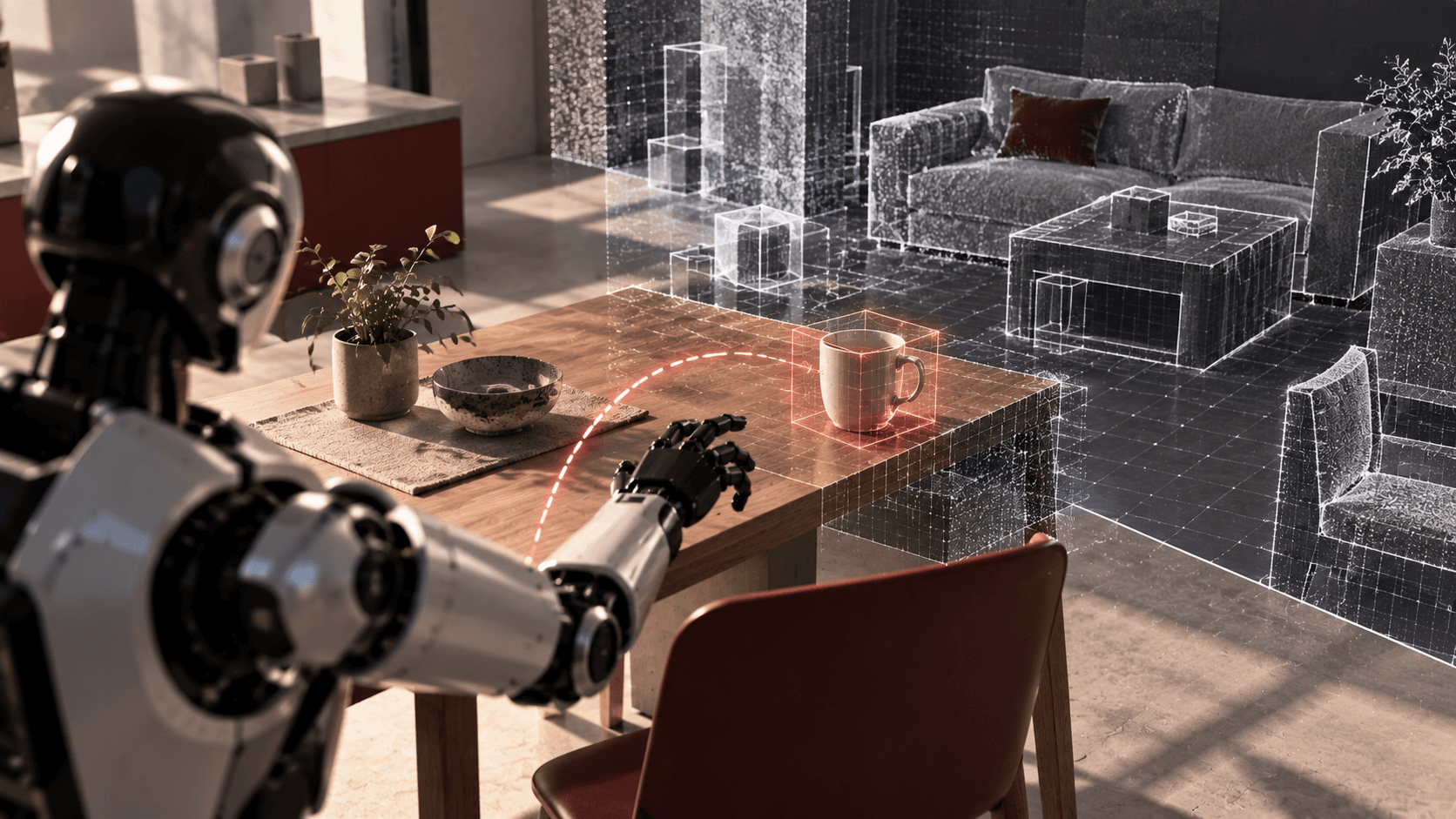
- Why Robots Need to Understand Space, Not Just Objects: another piece of the intelligence stack: understanding environments rather than simply recognizing objects.